
AMOS - a story of success at Air Transat
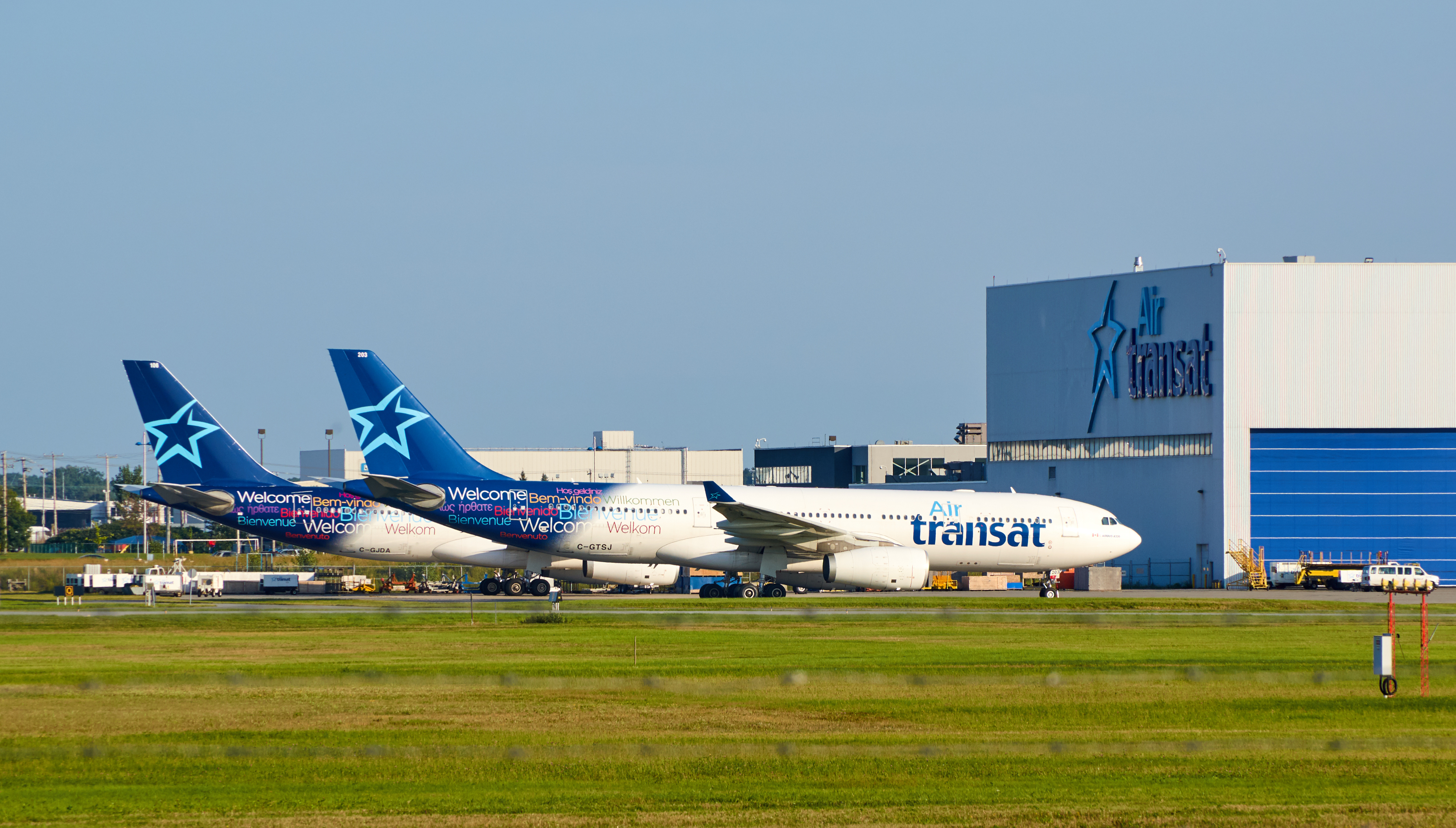
Air Transat is a Canadian holiday travel airline that flies around three million passengers to almost 60 destinations. From its main Canadian gateways in Montréal, Toronto and Vancouver, the airline operates flights to 25 countries. Based at Montréal-Pierre Elliott Trudeau International Airport and with approximately 2’000 employees, Air Transat is a business unit of Transat A.T. Inc., an integrated international tour operator.
The holiday travel airline is owner of one of the largest charter aircraft fleets in Canada. In a continuous process, the fleet has grown to 21 aircraft today and is moving more and more from Airbus A310 to Airbus A330.
Air Transat maintains its fleet in-house up to A Checks and offers their service also to other airlines while Heavy Maintenance is out-sourced to a 3rd party provider.
Initial situation and objective
In 2004/2005, Air Transat had embarked on a process of reviewing its technical operations information environment.
Air Transat decided to scour the MRO software market since their current software did not offer a solution for the planning and engineering department and was outdated as it was no longer keeping up with the rapid changes of the MRO industry. The airline also intended to purchase a software that was fully integrated and able to cover the requirements of the various maintenance departments.
After a Request For Information in 2005, followed by a Request for Proposal one year later, Air Transat finally signed the contracts with Swiss-AS in 2007. During the evaluation phase, five vendors showcased their product during three one-day sessions to the airline.
Following thorough market research and after applying rigorous evaluation criteria, the selection committee decided to opt for AMOS, as the Swiss M&E software seemed the best solution to all members.
Challenges
Air Transat has three main bases (Montréal, Toronto and Vancouver) and additional line stations in multiple Canadian time zones. As a result, the go-live changeover had to be well planned and support teams were deployed to all stations.
Due to the airline’s lean organisation, the key-user team had a high workload over the length of the project, e.g. in addition to their daily business they were engaged in process reviews, system testing, data reviewing, go-live preparation.
The data transfer process proved challenging due to several issues, such as field length differences between AMOS and the legacy system or missing data elements in the legacy system which were required by AMOS.
Prior to go-live, during the last months of project work, it was difficult to schedule the training for the AMOS end users. The training sessions had to be brought in line with the shift plans of all mechanics.
In 2007, Air Transat was the first airline in the Americas to have chosen Swiss-AS as their MRO software partner. Due to the time zone difference between Canada and Switzerland, an adjustment of the Swiss-AS’ support organisation became necessary.
Solution, realisation and benefit
Ten months after the kick-off meeting in January 2007, AMOS went live at all Air Transat stations with all modules at the same time. The avoidance of customisation requests led to the relatively short implementation period. Since AMOS already incorporated the knowledge of 50 customers at that time, Air Transat decided to rely on AMOS “as-is”. Beneficial to the implementation timeline was also the involvement of some sub-contractors with regard to the data migration.
Swiss-AS trained 20-25 AMOS users that belonged to the project team or were holding a back office position within the maintenance organisation. Internal trainers, trained by Swiss-AS, spread the AMOS knowledge to 150 mechanics (train-the-trainer approach). With the help of the internal trainers, the mechanics’ training was managed in a flexible way that allowed an adaption to the present workload.
In order to guarantee optimal support, Swiss-AS extended its support hours and now offers AMOS support in accordance with the American business hours.
Most business processes were reviewed and some re-designed to follow the AMOS default process, e.g. stores and pickslip process. Additionally, processes between the different main stations all over Canada were re-aligned and harmonised. The Canadian airline stated that AMOS helped them to streamline the company’s internal processes which were adapted to the proven AMOS procedures. One important process change with the implementation of AMOS was the objective to change the technical data entry process from centralised data entry by data typists to principally transferring the data entry tasks to the mechanics themselves – thereby assuring improved data quality and processing. AMOS requires up-to-date data inputs in order to benefit from the system’s integration, e.g. for parts requests and deferred defects planning. Air Transat gained productivity efficiency and achieved cost cuttings by leveraging technology and the increase of labour productivity due to the incorporation of best practice processes.
“We feel that AMOS is very much alive and keeps pace with the ever-changing aviation industry,”
AMOS usage today
Since Air Transat went live with AMOS, the aircraft fleet has undergone a significant renewal while maintaining an efficient Technical Services’ organisation. 300 users are now working with AMOS at Air Transat as mechanics in the hangar or as back office users. Since AMOS is used company-wide and is the only MRO software, the IT-architecture map was greatly reduced from multiple systems with add-on systems to mainly only AMOS.
Air Transat has only one interface to and from AMOS in place, which enables information transfer from their flight ops system, AIMS (importing aircraft utilisation history and future flight information in AMOS and exporting maintenance ground times to AIMS).
Air Transat was the first AMOS customer on the American continent and Swiss-AS was very pleased to win the Canadian charter airline over to stand by as a reference customer. Since the active usage of AMOS in 2007, several companies have taken the opportunity to visit Air Transat in Montréal to get an overview of AMOS in live operation.
