
AMOS - a story of success at AirAsia
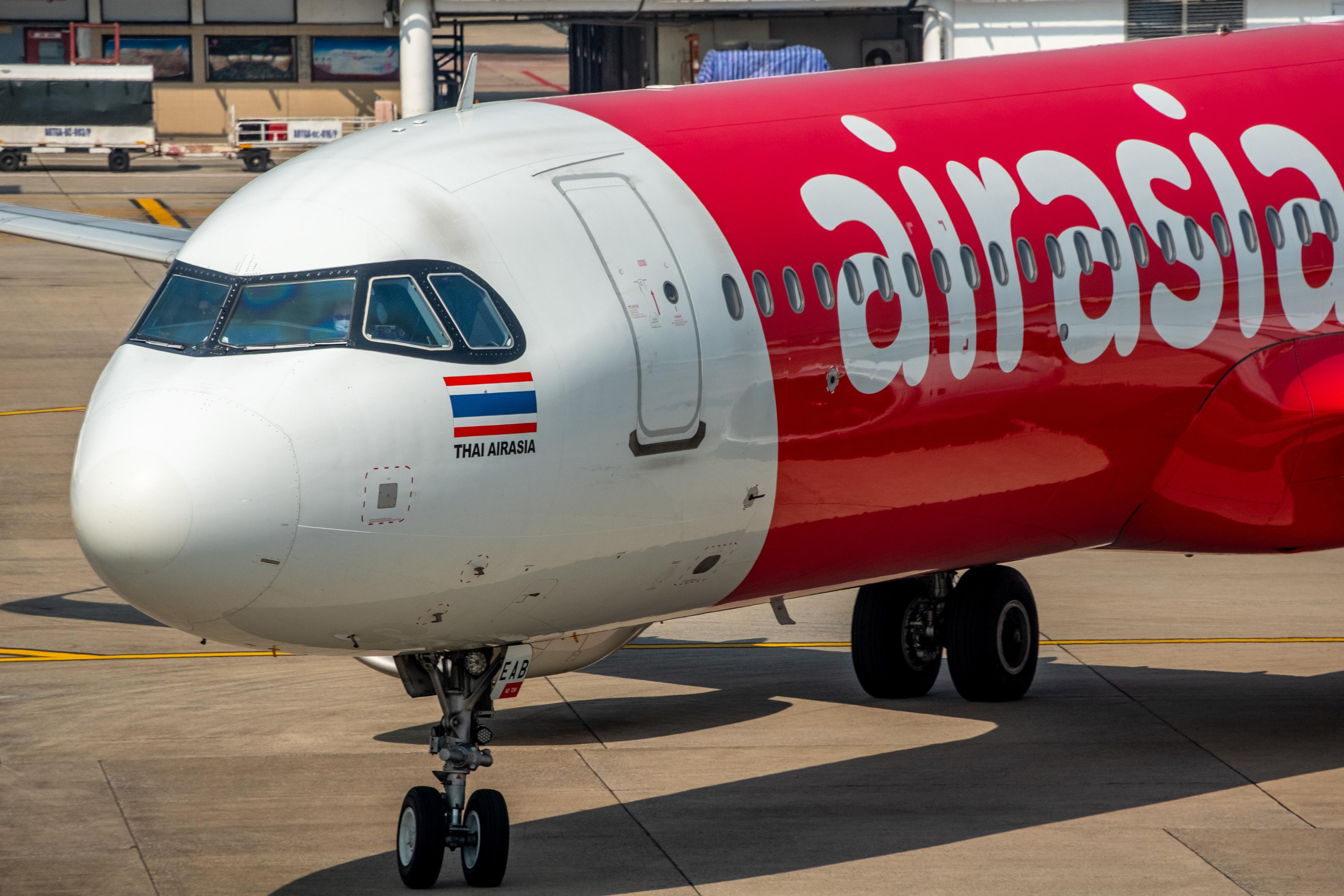
From its main hub at Malaysian Kuala Lumpur International Airport’s Low Cost Carrier Terminal (LCCT), the AirAsia Group operates a fleet of 93 aircraft, 130 routes to 76 destinations and employs approximately 8’000 members of staff. AirAsia was awarded in 2009 and 2010 the world’s best low-cost airline and links destinations across Asia Pacific including the ASEAN region, Australia, China, India, Bangladesh and Sri Lanka. The airline is regarded as one of the largest low-cost carriers in Asia and a pioneer of budget air travel on this continent.
AirAsia X, which has 11 wide bodied aircraft and is the low-cost long-haul affiliate of AirAsia, operates flights to Australia, northern China, Taiwan and the UK.
Following the policy of most LCCs, AirAsia performs Line and Light Maintenance (A&B Checks) in-house while the entire Heavy Maintenance has been outsourced to 3rd party providers.
Initial situation and objective
In view of its ambitious growth plans, AirAsia decided in 2006 to replace its current MRO software and was looking for a comprehensive M&E system to meet the needs of a fast growing airline. The search of the Malaysian low cost carrier was focused on finding a best-of-breed MRO software which could be implemented without major customisations and be able to convince its future users by using a state-of-the-art and user-friendly GUI. With AMOS being an “out-of-the-box” software and very popular among LCCs, it met these expectations and in addition, the fast-growing number of AMOS customers worldwide convinced the AirAsia management to select the end-to-end integrated MRO software made in Switzerland.
Air Asia’s attention was originally brought to AMOS by ex-Ryanair executives and Swiss-AS’ proven marketing and implementation partner, ST Aerospace which provides MRO services to Air Asia and has been an AMOS customer since 2004. Due to the proximity of Singapore and Malaysia, it was obvious that the implementation process was to be managed by ST Aerospace which proved to be a good decision.
“AMOS has streamlined our processes at AirAsia. To cite one example, stock level alerts at each station have improved our operational business to the extent that AOG situations could be avoided several times,”
Challenges
Data transfer is always a complex and critical process within the implementation phase and a key element to consider when adopting a new system.
Existing data needs to be cleaned, mapped, validated, converted and finally transferred from the outdated legacy system into AMOS - in AirAsia’s case a good deal of work taking into consideration the large number of aircraft whose data had to be migrated. The fact that AirAsia is a group of three airlines holding AOC’s in Malaysia, Thailand and Indonesia added to the complexity of the implementation, not only in terms of data migration but also in having to comply with various regulatory requirements.
Under the direct supervision of the airline’s engineering management, and with the assistance of ST Aerospace, the AMOS project team had worked tirelessly to achieve all of the implementation objectives and milestones on time. A rapidly-expanding operation covering main bases in three countries made this no easy task. The absolute commitment of the airline’s senior management and the dedication of AirAsia’s project leader and his team were the key factors that ensured a successful implementation.
Solution, realisation and benefit
The large amount of data was transferred with the help of a highly sophisticated migration tool which comes with AMOS. This tool is fully documented and facilitates the data transfer process. The big advantage of the migration kit is the provided data layout for all information to be imported into AMOS, which is based on industry standard business logic and does not require any knowledge of AMOS specific database structures. During the six months of project work, the future AMOS key users were trained by ST Aerospace while in addition in-house trainers were educated for the train-the-trainer procedure.
The best practices incorporated in AMOS' inherent workflows allowed AirAsia to adopt the system almost “as is”, although it meant that some of the airline’s operational practices had to be re-engineered to match AMOS workflows. In order to ensure that user acceptance is achieved, the project team was persistent in their engagement of key users in the entire implementation process.
Total user acceptance of AMOS was finally achieved in AirAsia not long after the Go-Live, as the airline started to reap the benefits of using AMOS and its built-in processes to manage its operations. At the end, AirAsia was given the unique opportunity to review and optimise its maintenance and engineering processes which had - among others - a direct positive impact on the stock level in the stations worldwide.
AMOS usage today
Since the successful Go-Live in October 2007, AMOS is used to manage the maintenance activities of the entire A320 fleet. Once AirAsia put AMOS into operation, AirAsia X, its subsidiary carrying out long-haul flights, also decided in favour of AMOS and is now tracking data of its A330/A340 fleet in its own AMOS productive environment. The Indonesian spin-off of AirAsia solely depends on AMOS for their scheduled and unscheduled maintenance. The system has helped them to handle the complex operation due to the geographical spread of the hubs and stations across Indonesia’s many islands.
As a member of the AMOS Strategic Board (ASB), AirAsia actively participates in the design process of AMOS and contributes to the continuous further development of AMOS from an LCC perspective. Air Asia is confident that they have gained with Swiss-AS, a business partner who is able to support their business plans for further growth.
