
AMOS - a story of success at Finnair
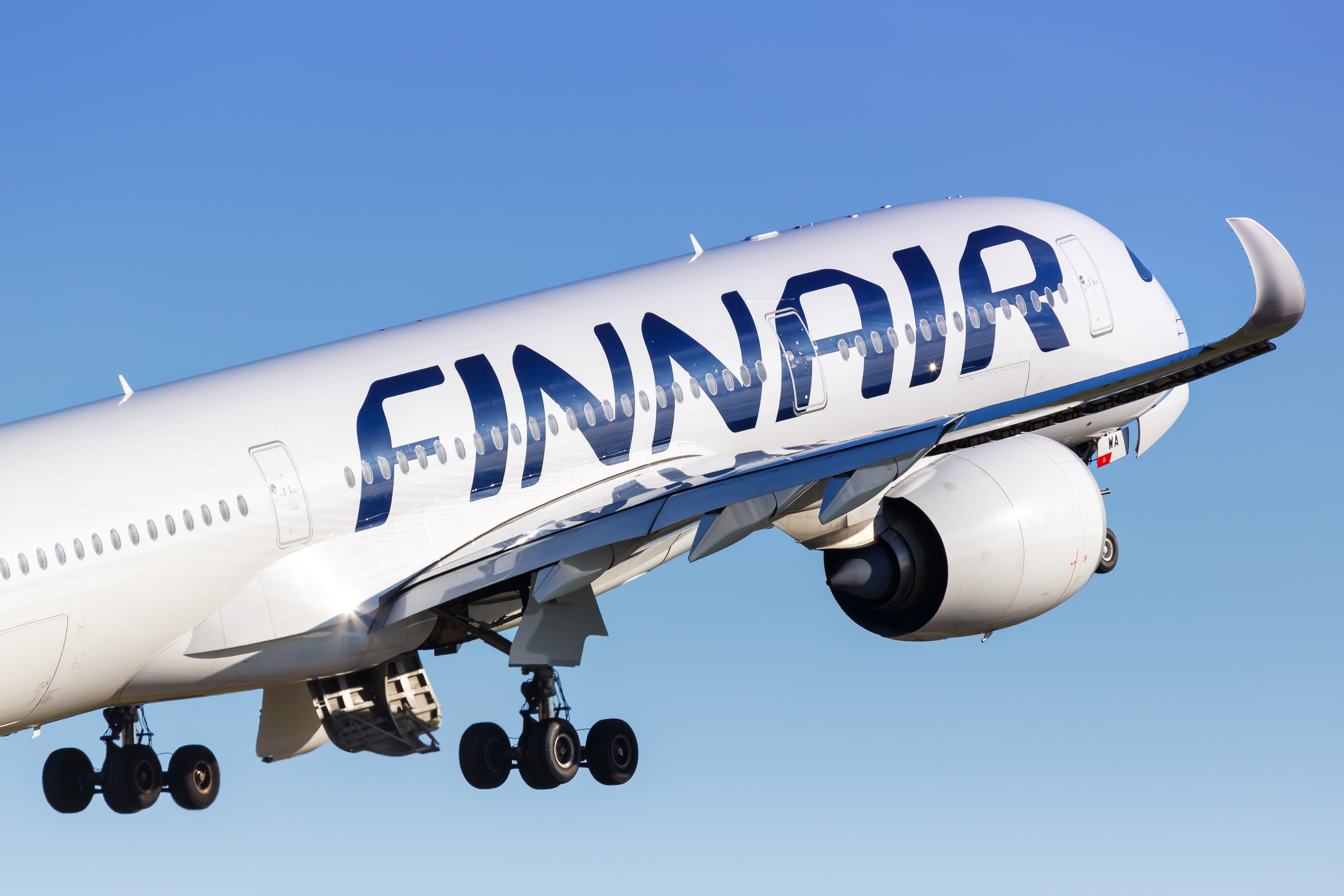
Finnair, one of the world's oldest operating airlines and its maintenance organisation were established in 1923. The Finnish national carrier offers its passengers flights to more than 70 destinations worldwide.
Today approx. 600 experienced professionals of Finnair Technical Operations are performing aircraft maintenance at Helsinki Airport. The 70 aircraft fleet is composed of the following aircraft types: Airbus A340/330, A320 family and Embraer E170/190.
Initial situation and objective
Finnair was looking for a new MRO system because its in-house built almost 30 years old mainframe based MRO software which was at 2007 integrated to generic ERP handling logistics, HR and finance was outdated, expensive and resource wasting to maintain. AMOS came into Finnair’s focus due to its integrated approach, modern architecture and user friendliness. The large AMOS customer base (especially in northern Europe) convinced Finnair to trust Swiss-AS and AMOS which was classified as a proven system with high-class functionality.
Challenges
Firstly, Finnair strictly adhered to the zero-customization policy during the definition phase, which meant that the company organization had to undergo several business process changes.
And as in almost every project, data transfer was the biggest challenge during the implementation. The data quality of the legacy system made it complex for the data transfer team to extract and to transform the data.
During the implementation period between 2011 and 2012 and also after the Go-Live, Finnair Technical Operations underwent significant structural changes as part of the corporate strategic project to enhance the competitiveness of Finnair Group. Services like base maintenance, component maintenance and warehouse operations were almost fully outsourced. These changes affected many internal processes and caused a significant reduction of employees in Technical Operations between 2011 and 2013.
Solution, realisation and benefit
During the pre-sales and implementation project, Swiss-AS got to know Finnair as a very modern and well organised company that is also quite tech-savvy.
In order to cope with the legacy system data, the data migration team followed a clear methodological approach. Finnair devoted much importance to this task, and so assigned a very skilled data transfer team. Several full data uploads were carried out during the project to test, analyse, and measure the data transfer process. This approach turned out to be a success since the data migration was performed on time and with high levels of accuracy.
“Swiss-AS was highly committed to this implementation project and did its utmost to make this project a success”
Process changes required as part of to the internal enhancement project were fully supported by the MRO software’s functionality and AMOS, including the new processes, was effectively adopted during and after the implementation project without affecting the original project schedule or budget.
The project time line was divided into the project definition phase (six months) and the implementation phase (twelve months). The first phase was dedicated to reviewing and defining the usage of AMOS in the context of Finnair. The implementation phase was started after approving the go-ahead project plan. The overall project was performed on time and within budget.
Finnair’s implementation strategy was to use AMOS without any non-standard customer specific change requests. Nevertheless, some enhancements to the product were developed based on their business requirements that were in line with best practice. In addition, Finnair was quite resourceful to solve their own customer specific requirements by using the readily available tools in AMOS, such as interface configurations, web-services, report-designer, etc.
Finnair has become an AMOS benchmark customer while being one of the most extensive users of the wide scope of AMOS business functions including the most recent enhancements. AMOS supports the continuing airworthiness, maintenance and other technical services of the Finnair fleet, and is used for the management of component repair cycle using with almost fully outsourced component repair services. Furthermore, Finnair makes full use of the software modules Shift Planning, Time and Attendance, OEM document management and engineering related programs such as Weight & Balance. A core key-user team of 15 FTEs was defined and maintained throughout the project duration. Additionally, each Key-User was supported by subject matter experts. From the IT point of view, Swiss-AS supported Finnair’s internal IT department with the “AMOS Operational Service” (AOS and thereby helped Finnair to administrate the AMOS application and its database.
AMOS usage today
As an outcome of the AMOS implementation, many business processes have been optimised in order to adhere to AMOS’ industry best practise approach. The feedback shared by Finnair and its 600 users in this regard was very positive. One of the most remarkable accomplishments was the new process in which the complete airworthiness related data must be updated in AMOS prior to releasing the aircraft back to service. Essentially, this means that checks, workorders, taskcards, and rotable labels must be updated by the mechanics before they certify the release of the aircraft. AMOS itself is not restrictive in this context, but due to the user-friendliness and visibility of data across departmental boundaries Finnair decided to impose this process to reap the benefits of up-to-date data made quickly available to all related operations departments.
Furthermore, maintenance production staff processes are all managed in AMOS from badge-in/badge-out for time & attendance bookings, to direct data entry and electronic user authentication to update work orders while performing aircraft work based on AMOS generated paper work including AMM tasks, all while using hand-held barcode devices to track working times. Another highlight is the integrated Spec2000 ordering process (Chapters 2, 3 and 4) which is fully supported by AMOS. Further interfaces were established between AMOS and their existing SAP / Finance and HR. Finally, the Finnair AMOS implementation included the integration between their existing aircraft e-TechLog system to AMOS. This real-time integration ensures an efficient defect control and planning process.
